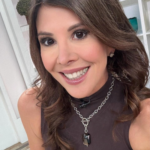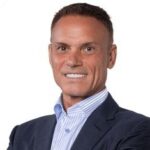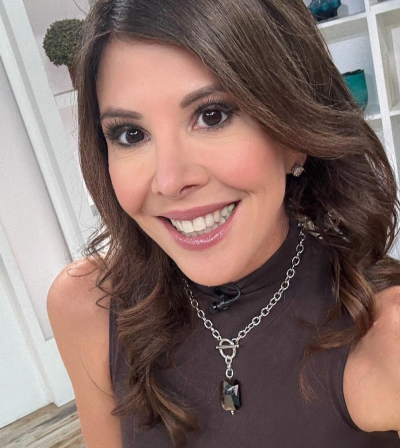
Joe Hamilton 00:46
Joining me on SPX today is longtime journalist and news personality Gayle Guyardo, welcome.
Gayle Guyardo 01:14
Thank you. I’m so excited to be here.
Joe Hamilton 01:16
So I guess it’s official. You’ve just retired it for 30 years. Not all of them, but most of them, with WFLA channel eight at
Joe Hamilton 01:20
33 years at Channel 8, that’s such an incredible run.
Gayle Guyardo 01:22
at 33 years,
Gayle Guyardo 01:23
Yeah, it’s been an incredible run. I started in my early 20s. I did news for 26 years, and then I lost all my vocal cords, and I had a lot of problems health wise, with calluses forming. And you know, it was had a crazy time. My parents had both just passed away. Then my dog up and dies, then my voice dies, and I had to step away from it, and then covid hits. And I really thought at that point that was basically the death of everything I knew in my life. And the phone rang one day, and it was channel eight, and they said, Hey, we’re trying to get a health and wellness show up off the ground, and we want to do it during covid so that we could provide valuable information to people. And I started with one woman and a cell phone. We always joked, you’ve heard of two men in a truck. We were, you know, two chicks and a cell phone. And those were pretty much our resources, a corner space. We worked on tables that were folding tables, not even real desks. And I checked my ego at the door. And for the last five and a half years, up until February 6, I helped build that show to a global level. Yeah. And this is on bloom, yeah. Bloom TV, which is part of NBC, Tampa, WFLA, which is part of next star nation, yeah, well, let’s go back to, we’ll say the rock star days, right? Because, I mean, 30 years you were part of people’s daily lives, and how was that, just existing in the community with so many people experiencing you every day as part of their routine, it was exciting, because typically in television news, you go where the jobs take you, and that’s typically not in your hometown. And so when I graduated from Auburn University, I worked in Montgomery, Alabama, at the fourth rated ABC affiliate there. Then I worked so hard to try to get out of there, I made my way to Sarasota, Florida, where I did the five and 10 O’Clock News at an independent station. And I’m telling you, I was like scraping every nickel. I made 11,500 in my first job, and then 14,000 in my second job. And I was working around the clock, and I just stayed persistent, really wanting to get back to Tampa. I would sit in television station lobbies for hours just for the chance of maybe meeting a news director and getting a break, and then I finally got the opportunity, and I had a long tenured 26 years of coming into people’s homes on the news level, which I loved. You know, it was back when journalism really was journalism. It wasn’t this weird, slanted sides, where, where’s that middle ground? Like, when do we bring the fair and balanced story to the table? It’s kind of evolved into its own money making beast, the industry. But back then, it was going into people’s homes and trying to get them to trust you, and that meant a lot to me to be able to do that in my hometown.
Joe Hamilton 04:19
And you probably operated it and worked with a lot more confidence once you were here. Did it just kind of open up, because you said, This is my home, and give you a level of comfort and ease with your work here ?
Gayle Guyardo 04:28
It did. And my late mom, she actually was really ahead of her time. She went to Northwestern University, and then she was in radio in New Orleans, and she actually came back long before I was born, and she had a show on channel eight and pulse 13 back in the day, and they were fashion forward shows like, you know, she had sponsors and all the things. And I remember the best advice that she gave me. She’s like, you know, Gil, there are so many beautiful girls out there that can read a teleprompter, probably more.
Gayle Guyardo 05:00
Talented and more beautiful than you are, but this is your hometown, and you have an obligation to start sharing people’s stories, one story at a time. So I went to my news director, and I’m like, after the Morning Show is over, I would like a photographer, and I want to go out into the community. And because without the community, you don’t have a job, because we are all widgetted. It’s like a news director. It’s like buying a tie. Which tie do I think is the prettiest, or which tie do I think will look the best? So I started going out and telling stories every single day, and then it started to create kind of a groundswell of people realizing that I wasn’t just in it for the job. I was there to say thank you for welcoming into your home. Yeah. And that was
Joe Hamilton 05:42
actually my next question is, what is the essence of Gale that you’re trying to put forth? And it sounds like that was basically it, right? Yeah. So you mentioned beautiful girl, talented at reading things, and then you meant, you know, then there’s journalism. And so was there a clear divide to you of the type of anchors who, you know, where this was valued, and also probably with the news directors, what they were looking for as well. Some wanted that journalism and some didn’t. So how did you sort of navigate between the two worlds?
Gayle Guyardo 06:08
It’s interesting, I think, another great piece of advice, because I started out as a journalist, but you can get stuck on that trajectory for your entire career if you just focus on getting out and reporting stories. So I somehow navigated early along like I was always the girl that would do the morning news. Mornings have always my guess because my dad was a dairy farmer. We were used to waking up early, but I always had that early shift, with the exception of a two, three year period of my 37 year career span, and so I always kept journalism alive, and then I also sat behind the desk. So there are a lot of talent that you see on TV, and they call themselves indoor cats. They don’t want to go outside, they do not want to be out in the elements. They don’t want to be out with the people. They simply want to go in and read that teleprompter and deliver the news. I created a hybrid career at a very young age, and I kept it even when I got to bloom, I literally was out with my cell phone, and people would look at me and they’re like, weren’t you the morning anchor on NBC? And I’m like, Yes. And they’re like, you’re shooting stories on your phone and I’m like, Yeah, I’m shooting stories on my phone until I can build up enough viewership to get sponsorships, to get a team in place where I can actually have a photographer and go share stories. So I think storytelling and getting out of the building and the four walls is the best way to not only do your job to its fullest, but to succeed at it.
Joe Hamilton 07:45
Did the news directors see that as a value add? Or did you have to train them to understand this is a good thing?
Gayle Guyardo 07:50
I had to train them. They thought I was taking away resources from the bleed and lead news. They didn’t appreciate my feature stories or going out in the community like you would have been somebody that I did a story on. Like I would have, well, like I did with bloom. Like this would have been something that I thought, hey, this isn’t this is somebody trying to make an impact in the community. We need to know about this guy. Or maybe it’s a mom and pop restaurant that opened up, you know, people that are just trying to be part of the fabric of our community. It’s important for me that everyone gets to meet them and gets to know who they are.
Joe Hamilton 08:24
After 30x years, you outlasted all the news directors at that point. That is true. That is true. You know humans are, and we know in the news business that even the act of opening the paper, knowing the crossword, you know you’re part of so many people’s morning ritual. How aware were you of you being a part of their morning habits, and that you were helping them start the day. Was that part of your consciousness when you were working?
Gayle Guyardo 08:47
It always was. But I think it became very real when I was actually in Quantico, Virginia, covering a story for channel eight on serial killers, because we had some incidences where they were chasing them here in the Tampa Bay area, like, I believe, too. And so they sent me to Quantico to do a story, and I was pregnant at the time, and I just wasn’t feeling right, like I was feeling pressure in my stomach, and I just something was off. And then I came back and I was doing like a charitable event, and I again, I just had to keep sitting down. It didn’t feel good. And I was just about to go to New York to the NBC and the Today Show and fly off. And I went to get a, you know, permission to fly pregnant. And my doctor’s like, hey, we just got a new sonogram machine. Let’s take a look at the baby. And I’m like, okay, and everyone’s all laughing and joyous. And then it got real quiet, and they didn’t see a cervix. And I had already had one baby to full term, so they weren’t thinking, Gosh, this girl’s got an incompetent cervix. So then I was about to leave, and I got a call my beeper. This is how long ago. It was my now, 26 year old. My beeper started sounding, and he said, could you just see a specialist? He’s my friend. His name is Dr. Angel, could you go see him before you jump on that plane? So I went, and he looked. He said, The baby’s in the birthing canal. You’re not going anywhere, but to St Joseph’s Women’s Hospital, where I stayed for the next three months of my life. Yeah, on bed rest. And at that time, I was supposed to be then promoted to the five and six o’clock newscast at channel eight, and they put a much younger, really beautiful, talented girl in my space in the mornings, and I just sat there looking at the walls and wondering what was going to happen next. And what happened next was that viewers started pouring in with letters and support and prayers to the point that it was overwhelming to the TV station. How many people cared about the fact that I was, you know, I get choked up still, and it’s been more than a quarter of a century, but how many people cared that I was fighting to save my child’s life? And it was at that moment that I realized that that’s who I’m really answering to, that’s the news director in my life, not the guy behind the glass wall in the news station, not the suits on the fourth floor. The people are my real boss, because they’re the ones that care and they’re the ones that support me, and without their viewership, I wouldn’t have a job.
Joe Hamilton 11:22
It’s beautiful. And that, I think we’ve talked in the past, that you are essentially a binding agent for the community, you know, and that’s one of the things that that we’ve lost in news as we’ve gone to more national spread out social media platforms and whatnot. And, you know, I think that’s perfect example of how much you helped glue the community together, and they showed you that in that instance,
Gayle Guyardo 11:43
They did. And I think you talk about how we’ve gone on a spread out on a national level, what I think a lot of people don’t understand, that I like to explain to them, and I’m not here to burn bridges, because I left channel eight on a very, very high note. And NexStar Media Group, which is the largest media conglomerate in the nation, their higher ups were also very respectful to me, and I appreciate But what people don’t understand is that the landscape has vastly changed, because when I started working for channel eight, it was just a group of, you know, good old boys wearing bow ties in Richmond, Virginia that owned a handful of television stations, and each television station ran autonomously. It was its own voice. It was the voice of the people in that community. It was local. As soon as these mergers and acquisitions happened, I would say in the last seven to 10 years, but more like seven eight years, these mergers and acquisitions. So my company owns two to three stations in every television market in the nation. So that is one voice. So it is kind of rubber stamped. It’s like, as my daughter taught me, she’s like, same letter, different font, it’s pretty much the same. We’re saying the same things. We’re regurgitating the same news, and whatever the powers that be believe in politically I’m speaking right is what you’re going to hear so and a lot of people that know me well feel like the you know, there’s a book. It’s called the Body Keeps the Score, and it talks about your emotions and what you’re dealing with on the inside, mentally and emotionally, your body will manifest that. And they believe that the calluses started to form on my voice, because I knew at the end of the day I really wasn’t speaking my truth. I was speaking someone else’s truth. And I think that, you know, that’s kind of where the industry has turned, and it’s disappointing, because it leaves the average consumer the huge responsibility of turning over a lot of different rocks to find out what’s really going on in this world. Because right now it’s a very divisive message, and we were actually trained to spark people’s emotions, and now I believe it’s elevated to rage baiting people.
Joe Hamilton 14:10
Yeah, and because that’s what gets people to click now exactly, we’re desensitized to the point that it really has to tip them one way or the other in a heavy way to get that click
Gayle Guyardo 14:17
Correct.
Joe Hamilton 14:18
That’s not a good trajectory.
Gayle Guyardo 14:19
No, it’s not.
Joe Hamilton 14:20
You mentioned it briefly, but just, I want to finish the story so your daughter, everything ended up working out?
Gayle Guyardo 14:26
She’s 26 she’s thriving. And Cambridge, Massachusetts, yes, so I was very, very blessed.
Joe Hamilton 14:32
One of four.
Gayle Guyardo 14:33
Yes. I have four daughters, ranging from 18 to 28
Joe Hamilton 14:40
It’s such a varied and complex topic, but a lot of gender related advancements happened, you know. And again, I think the classic was, like you said, the certain type of person behind the news and the certain type of stereotypical news director. Are we in a better place now or in a worse place, or kind of different variation in the same place?
Gayle Guyardo 14:58
I think we’re in a better. Space. I fully believe that, because I compare it, and I love to tell this story when I do speaking engagements, even at Auburn University back in the 80s, when I was there, you know, there weren’t many girls whose names ended in a vow in the Deep South. And when I got my job in Montgomery, Alabama, at the ABC affiliate there, my then news director, who was like Ron Burgundy, his name was Matt Carmack, and he said to me, all right, Gayle, you can either be Gayle Garrison or Gayle green. And I called my folks, and I was so excited. I’m like, I’ve been given this job offer, and I can either be Gayle green, Gayle garrison. What do you think I should be? And my dad, who had a slight Italian accent, said, Don’t come home if you change your name. And he hung up the phone. And so I had to go back and explain to Matt Carmack that I had to be Gayle Guyardo. Now my name is spelt with a lot more vowels in it. We’ve shaved off about five to make it look like what it sounds like. Guy R doe, you know, we spelled it phonetically. And we came to this agreement that I would keep my maiden name and I would keep my heritage. But yes, along the way, I was dyeing my hair blonde and trying to fit this narrative of what, you know, news and what women in news should look like. And then there was the wearing the suits to look like a dude. And then, you know, you’re so and then I had to read the guy. Got to read the story about the war, and I got to read the story about the duck crossing the road. That’s all changed, and women have prominent places in media. Is it as much as the white, middle aged man? No, not at the higher hierarchy. But there are definitely waves of change happening in the industry where women have a voice, they have a place, and they can have their own look. They can be any shape, size or color that they want to be. Because there used to be a time when there would be a consultant that would come in and they’d say, hey, Gayle, you look like a chubby teenager. You need to lose weight. It would be okay to say those things to us back in the day, and there would be no recourse for saying so like, there’s no lawsuit, or you’ll never work in the industry again. You just comply, right?
Joe Hamilton 17:10
So not all the way there, but at least on a good trajectory.
Gayle Guyardo 17:13
Yeah, I think we’re on a good track. Yeah.
Joe Hamilton 17:14
And the other thing with, I think, with local news, is that as what the internet has brought is expertise on tap, essentially. So anything that you’re interested in, and as you read stories or tell stories, the people who are going to immediately be drawn to those stories are people who may already know a ton about those subjects, because it’s all available to them anytime. So did that ever introduce a new sort of bar or way that you handled stories to kind of allow for that?
Gayle Guyardo 17:39
Yeah, I think, you know, early on in the industry, the newspapers were the godfather of news, and those were the considered the really highly respected journalists, because they were given the time and the energy to go and truly research these stories. And then, of course, the Associated Press, when they that old saying of rip and read, which doesn’t exist in a computer world anymore, but there was like, we would get the paper in the morning and we’d read it, and then we’d report it. And people already have this newspaper sitting in their front driveway, and we’re like, kind of regurgitating. And so I felt like, if I was invited to any civic organization or anybody was like, Would you like to come and see this event? Do you want to come do this? Do you want to come do that? The answer was always yes, yes and yes. Even sitting here today, I genuinely want to know what you’re up to, because I love sharing people’s stories. And so if you really want to know what the news is, you’ve got to get out with the people. It kind of goes full circle to what I was saying. You know, with my mom’s wise advice that I have to be out in the community, because that’s where you get the real stories.
Joe Hamilton 18:50
Yeah, with bloom, you said a line that jumped out at me. I had to swallow my pride or just shut down my ego to make the transition from where you had been on the desk to doing these stories. Talk a little bit about that and how you did that, and what you latched into to kind of be okay with doing that.
Gayle Guyardo 19:05
So I knew that I was not leaving on my own terms when it came to my health, when my doctor said, You are like an injured athlete, you got to get off the field. I didn’t really want to get off the field. I knew that the waking up at one in the morning trying to juggle four kids. Then towards the end there, you know, I was taking care of both of my ailing parents, and I did get sick with an autoimmune disease of borderline Hashimoto, so my thyroid, so I gained a lot of weight. My hair was falling out in chunks. It was a really tough time for me, health wise, and mentally, I was going through a lot of grief, a lot of loss. So when the phone rang and they explained to me that the salary would be a third of what I was making because they didn’t have advertisers yet, even when they got the advertisers, they didn’t jump up the salary. But they explained like, this is something that would. Need to be a passion project for you. Are you up for it? And I definitely was, because I thought it was be a tremendous opportunity to build something and go back to the very phase of life that I came from. I built the morning show at channel eight. I built their weekend edition when I first got there. I built a lot of content throughout my career, and I’m like, wow, like, they’re gonna give me the keys to the kingdom and let me build something. So it was exciting. And then what was interesting along the way is that all of the stories and the people that we’re bringing to the table, and we had to conceptualize the shows, we had to go find the guest and bring them in. I actually learned a lot, to the point that my own health turned around, and I’m actually now I stepped away from the day to day grind because of a commitment I made to my husband when we’re empty nesters. I’m stepping away and our daughter graduates here in the coming months. But what I’m retiring from the day to day grind of going in and writing eight to 12 stories every day, booking these things, these endless work, work, work, work, work, work, work. I’m not going to step away as much as I want to be. You know a lady that lunches, and I’m enjoying that now, because I haven’t had a lunch with friends in five and a half years, because our show production started at 1230 sharp. But I do think that the healthcare system as we know it today is very, very, very broken, and I’m going to align myself with a group that’s highly regarded, and they’re launching something on a national level that will give people the information that they need to become their own healthcare advocate. If there’s one thing I learned along the way, is that I was part of that system that was failing me. I was the girl with her hair falling out. I was the girl with 25 pounds I couldn’t lose. I was the girl with a relatively beautiful life, or I should say, definitely beautiful life, who was depressed because my hormones were all off, like all of these things that I never knew about my own health because I had a 15 minute doctor’s visit that was highly driven by insurance companies and pharmaceutical companies. So I think we’re at the precipice of blowing the lid off of what Americans can do to feel better and actually take their health into their own hands. So I’m leaving bloom. I’m going to be more working more remotely and taking on projects and things like that. But just like we’re sitting here today, you don’t have to be at a studio at an NBC affiliate to get your messaging out. So you’ll I’ll still have a voice in the health and wellness space. It’s something I became hugely passionate about, and I’ll probably have to start out back with the cell phone and rebuilding again.
Joe Hamilton 22:44
Yeah, that’s somewhat the world we live in, yeah, you know. And there are people who do quite well, you know, as an individual, what they call them, influencers, creators or whatever, and that’s probably more the norm than the exception anymore. And so you kind of have a running start because you already have name recognition in the area. So along those lines, you’ve had a modicum of fame recognized walking into the stores, and here locally, how do you transfer that, given the paths that are available now with YouTube and different channels, what’s sort of the strategy to move into that next era, given what the Running Start you can already have?
Gayle Guyardo 23:18
So I think I’m looking at it kind of two prong I like to stay involved and continue to have a voice in health and wellness, which is news that we can apply and use every day of our lives. So I still would like to have that voice, and I’d still like to vet leaders and people that are actually making a difference, because there is a lot of false information on line that people are watching on Tiktok and Instagram and YouTube and all of those things. So that is something that I’d like to do, is to continue to journalistically vet what kind of information is going out to people and have a voice with that. That’s one thing. The other thing is, I’d like to help guide other people to do the same, because there is a lot of noise out there. There is a lot of information. So let’s say the doctor or the functional health expert, what if they want to be the star of their own show? So I’ve launched a program called How to Host, how to guest, because when we put shows together, something that I’ve done for my entire career and really got, like, hands on knowledge of doing bloom. We don’t just arbitrarily put guests into a show. There’s a lot that goes into how you funnel that information, how you can grab people’s attention. And then as part of that, there is going to be a huge network launching where people would have the opportunity if selected to be part of it. And what makes it different than YouTube or Instagram or Tiktok is, I think we all know I’ve been hacked several times. I’ve lost 1000s and 1000s of followers. There was one time a Chinese shopping channel running on my. Facebook account, and even NexStar nation couldn’t even get it back, and they have a huge reach with all of these meta and all of these things. So people would own their own channel on this network, and it would be primarily health and wellness, but health and wellness is a wide net to cast. It could be your financial health, your mental health, your spiritual health. There’s a lot of things that fall under what makes us healthy, holistically.
Joe Hamilton 25:26
So this is an actual platform that will stand up,
Gayle Guyardo 25:28
and people will own their own space on the platform. It will be theirs. It won’t belong to somebody else. So that would be one I don’t want to like pigeonhole myself into this one venture, but that’s one of the partnerships that has come to the table. So I want to help people create content and then have a place to make it land.
Joe Hamilton 25:49
Yeah, that makes sense. And because the challenge today, with the technology that’s out there, with the expertise that’s out there, with instruction that’s out there, it’s almost like the content can be great, but distribution remains the challenge, and attention remains the challenge. There are many, many amazing pieces of content to just go unseen, unfortunately, right? So how do you fight that problem?
Gayle Guyardo 26:09
So the folks that I’m working with already have a real head start when it comes to hugely successful documentaries, and believe it or not, they launched a huge magazine line that is now in like 64 cities across the country. And it was just, it’s so young, but it’s already so well received. They’ve brought on some of the industry leaders, like Dr, Daniel Amon, Dave Asprey, all these people. So the way they explain it as think of it, if you’re like, you’re building a shopping center and there would be a Dillards or a Saks, Fifth Avenue, a Neiman Marcus, maybe a Macy’s. There would be these people on this platform that have large voices, then the other voices would come in and they’d have a place, and if possible, if their show’s good enough, there could be some collaborations between the two different channels, and you appear on one, and they appear on yours, but it’s on platforms called OTTs, which is OTTs over the top. So it’s the streaming platforms like Hulu, Amazon and their masters at getting those algorithms out there. So yeah, there’s a building point there. I mean, I’m Hope to have a channel within this network, and yes, I’m going to have to somewhat go back to square one, but I know how to garner viewership if I was able to do it on a television show. And you and I both know people are not doing appointment TV anymore, but they really were rating show it. It’s not just Gail guard out saying it. People were tuning in or setting up their recording devices to watch bloom at 2pm on that station and in other places around the in the country, because it was information that they needed. It was going to be information that could potentially change their life, and in some instances, save their lives. So I believe that this platform will take off because this this company already has a track record of doing that in the health and wellness space. Will that be the only place you’ll find? Me, absolutely not, but it’s an exciting conversation to be having.
Joe Hamilton 28:12
Yeah, well, and I would argue that they were setting their recorders to get that information from a source they trust to trust is huge. Yeah. So, you know, I like, I don’t often do the sort of one on one thing, but since you are just to give a taste, so if someone were to reach out for how to guess, how to host, or how to host, how to guess what is sort of your process, what would they experience if they engage you to do that work with them?
Gayle Guyardo 28:39
So it’s multi level. Some people might just want some one on one coaching to kind of explore what it is about their company that makes it stand out. Like, for example, I’ve been working with a company called lifeguard imaging. There are a lot of scanning places there that do this low radiation CT scanning, but I think what they’re missing because there’s so much competition that I’ve been advising them to do is I’ve personally met because they were one of our larger clients on bloom. And by the way, I should clarify what I’m saying. 95% of bloom was editorial. The guests were not paying to be on my show. They were there because they are experts in their field. There were people that wanted to jumpstart their businesses in the Tampa Bay area, and they went to the marketing department, and then they get some time on bloom. So what I started to help them evolve is that I met so many people that really were about to have had a widow maker, and they were a ticking time bomb, or they had pre stage one pancreatic cancer, and that was going to spread and they were going to die, the outlook was not going to be good. So I thought, What about life after lifeguard? You know, like, what does your life look like now that it’s been saved? Who are the people that you love and embrace? What lens are you looking at life through? Because you had a second chance? So. I might sit down with people and just talk to them about what is the best way to convey their message and how to make the conversation a little bit more directed and not so all over the place. That would be one thing. The other thing is actually taking people and creating the shows for them, getting the studio space, whether they’re the host and they’re bringing on their own guests, whether they want my help, I don’t need to be present. I don’t need to be the star of every show. I can be in the background, directing the show. So that’s what it would look like, is helping them build a platform and then finding places for that to land. It’s fantastic.
Joe Hamilton 30:38
Thank you, and it is definitely, I mean, coming from experience, starting your own thing, is hard. It’s a lot of work, and hopefully you can bring a few clients to start from your existing rails and then pick them up. But it’s a lot to take on.
Gayle Guyardo 30:51
It is, it’s tough. And I know my husband’s like, Wait, I thought you were retiring. We were going to travel and do more things. But because we do live in a virtual world, you know, you don’t necessarily have to be always face to face. You could do a lot of pre work done virtually and zoom meetings and things like that, and then come together for, you know, a day of creating content, just because you had such a good run.
Joe Hamilton 31:15
I’d love to just get a few anecdotal what’s a story in your, you know, long tenure that that you still remember,
Gayle Guyardo 31:21
you mean, like opportunities to be out there and like,
Joe Hamilton 31:25
just a story you told that sticks, that stuck with you, a difference that you were able to make in somebody’s life, or just an incredible story that made a dent in the universe for you.
Gayle Guyardo 31:35
For me, and I know there’s been some journalists that have had this particular experience, but I had two back to back to back experiences, and they one involves flying with the Blue Angels, which was the most incredible experience of my life. At the time, they did not wear flight suits that constrict, so you had to learn your you know, they actually took us through a class at CENTCOM, at MacDill Air Force Base to learn to like, constrict our bodies so that when you hit another G you don’t pass out or throw up, and all the things that people do. I flew with them, and I was determined to not throw up and not pass out, which I did neither of but I was physically exhausted. In fact, my photographer who had been out on the ground waiting for me for like, 45 minutes, I asked two questions, and I had no more energy to ask this military member any more questions, because I was exhausted. Then I had to go find a flea ridden couch at MacDill Air Force Base, which this is pre 911 so I’m sure there’s more security these days, and you wouldn’t find Gayle Guyardo sleeping on a couch in a hanger, but it’s like they literally could not wake me up because I was so physically exhausted from flying in that plane, and so that just gave me a whole new respect for stepping into other people’s shoes. I did that, and then another one that I did in Sarasota, because I was always looking for ways to get attention from news directors in the Tampa Bay market so that they would consider hiring me, or would put my resume tape on the top of the stack. So I got the great idea to go out with Sarasota County’s Sheriff’s Department, which would probably also not be permissible in today’s day and age, but I was going to go out and I was going to be the criminal and be attacked by the canines, you know, the canine cops. And so we, guy, guy, jump in the car with my then photographer, and no names will be mentioned, and he’s like, What are we doing? And I’m like, we’re going to go out, I’m going to put on a sleeve, and they’re going to put me in this, like, dark space with all these lights shining on me, and they’re gonna release a dog on me, and it’s gonna be amazing. And he said, I can’t. I got weed in the car, kale. So I was like, so we turned around, and we went and picked up another photographer who wasn’t nearly as skilled as the one that I was going with. And we get out, we did it. And I heard the growling, and there was this Rottweiler, and it was foaming at the mouth. It couldn’t wait to get to me. It came after me. It pushes me back, it shakes it. And they’re like, leave it, leave it. And the photographer goes, could we do that again? My battery went out, and I’m like, Oh, no. So, you know, I did that again. So I think these stories of just trying to stand out and step into shoes and maybe feel what it’s like to walk in someone else’s path, even for a day, even for an hour, is so enlightening.
Joe Hamilton 34:34
Yeah, it’s one of those amazingly fun nuances in human psychology that news has this place of authority. Because, you know, you know, our journalists have done weird stuff when diving with sharks in the aquarium speed boat race for the race, but under the guise of doing a story, you can kind of ask to do about anything. People usually say, Yes, you know, just because you’re on a news platform, it’s fun, you know. So. And I think, you know, again, with all the YouTubes out there, Lord, that’s that power has been given to the masses, sure that, you know, people will just walk up and say, I’m doing an interview for YouTube, and you can ask them any question you want, and they’ll basically answer they’ll answer it. You’ve got this weird authority thing.
Gayle Guyardo 35:13
You know, it’s interesting. I’m glad you brought up the YouTube because I actually am very excited about, as long as it’s handled responsibly. I’m excited about these journalists that don’t need to be hired by a news director and don’t need to be given a green light to go out and gather information, if we vet it and they’re on to something. I mean, you can make a career based on investigative journalism, something that has fallen by the wayside. They’re not giving the resources or the money or the support for a lot of these investigative reporters who, if you look at it, there’s two instances where it wasn’t law enforcement, it wasn’t the FBI, it was no one official. It was a journalist that broke the athlete a Larry Nassar case with the with the gymnast, that was a journalist that found what that guy was up to and broke that story. And the hot topic of the day, Epstein Island, that was not law enforcement, that was not and I’m talking way back in the day, when it got busted, long before the chatter that’s going on now, but that was shut down a long time ago. That was a journalist, and journalists don’t have the time to do that due diligence anymore, so it is going to take the YouTube guy, the person that might go out there and crack the code, and crack the case,
Joe Hamilton 36:37
yeah, and it’s also being done in aggregate, because you’ll, you know, people will have put cases up and evidence of, you know, some person did this. I think there was a murder case where, you know, they had a little bit of a partial video someone, and all these different people started triangulating different pieces of it. They figured out where it was. They, you know, and groups of people are now are solving murders. And that kind of goes to, you mentioned earlier that trust has been democratized to some extent. You know, kind of the purpose of news was to have be a trusted source. But that’s, you know, it’s kind of degraded as trust is in mainstream journalism has been undermined for years, and some cases, rightfully so. In some cases not. But, you know, at this point, everybody has the opportunity to build trust, build an audience. You know, the question is, you know, ultimately, as we have so many different perspectives that people dig into that have so much truth in each of those perspectives, but you have opposite perspectives that are also equally true. You know, how do we exist as a society? Essentially, when we have equally true and opposite things?
Gayle Guyardo 37:34
I think that we’ve lost the art of just actually having a healthy conversation or a healthy debate. Because back in the day, when I was in Montgomery, Alabama, I was a legislative reporter, because Montgomery was, you know, the capital of Alabama, if I came back with a 15 second sound bite from a Republican, I better have had a 15 second sound bite or be able to match it identical to the frame each law maker got 15 seconds, not on different television stations, not on different days, not on different weeks. In the same story, one says one thing, one says what they’ve got to say, and it needed to be fair and balanced. They both need to be answering the same question. Good luck finding that kind of journalism now it doesn’t exist. So I have, you know, a rule. I have four daughters and a husband, and we’re big meal time people, or at least we were everyone’s kind of, my last one’s about to graduate, but we would sit around the table and, yeah, you’re allowed to have your voice and your opinion, but come to me with a source that we can rely on. It can’t be Tiktok. It can’t be what you heard on Instagram. I really need to know. Is it Reuters? What is it? Where are we coming? Where’d you get this? And sometimes we take a beat and come back the next night and hash it out. That’s what should be going on in every household, I think, because it’s become so polarized that people are standing by things that I’m like what you know you don’t because they’re just feel like they got to take a side.
Joe Hamilton 39:07
Yeah, and we espouse so in our posting guidelines for comments on our news platform, we espouse the steel man philosophy that if steel man is if you can explain somebody on the other side’s position better than they can, at least now you’ve shown that you understand the different perspectives, and then that should Garner respect from you. I think the problem now is going back to the expertise. Thing is, it’s not just two sides anymore. You know, you take an issue like offshore drilling, for example, you have your Republicans, you have your Democrats, but you also have your environmentalists, who are deeply, deep experts in the potential risks. And you have your folks that are security folks that say, Hey, the more offshore drilling we do, the less dependence we have on foreign oil that makes us more secure. Then you have the corporate folks who say, Hey, we’re creating jobs, we’re creating assets, we’re creating shareholder value, and they can show how impactful it is to your average Teacher’s Retirement if we do this. And each of them, again, has a very, somewhat conflicting perspective, but there’s truth in all of those. Right? And if someone’s an environmentalist who spends all their time deeply understanding the environmental risks of it, unfortunately, when the corporate person says, hey, you know, here’s the 17 jobs we created and the retirement value we created, and they’re they deeply understand that piece of it, those two people, how do they actually connect and align over what’s really the case with offshore drilling, and so now, when you have 6879, perspectives that are all deeply researched and deeply understood, trying to communicate with each other, that’s the new paradigm I think we’re in. And I’m hoping what will emerge is some sort of in where I think news will hopefully go to is, I call it sort of multi perspective, ism right, where the person who can take those perspectives and distill them and put them in a way that the average person can get a taste of each of them and respect for each of them, but then hopefully we can all align around a path forward, and that’s that with the fragmentation of social media, is what’s not happening now. People are just and they’re right, and you feel for them, the environmentalist group will just go down that rabbit hole, and they’re 100% right, but the you know, this person also is 100% right about national security, and it’s just, which one you know, do you lean on?
Gayle Guyardo 41:05
I mean, I think at the end of the day, I don’t know if you’re watching paradise like I am. It’s not Hulu, but it does speak to what’s going to happen if we keep, you know, like the earth is going to shed us like a snake. It always does. I mean, it’s not the first time people are like, well, I don’t believe in this. Well, at the end of the day, if you look historically, there are times that we’ve gone extinct or almost extinct, and then you know, you have to build back. So I hope what worries me, and I keep going back to how polarized we’ve all become, is that everybody’s so white knuckling their way with their opinion that they’re not adhering to any kind of compromise, because you’ve got to look at what the drilling is doing, but then you’ve got to look at so what can be done? Like, I don’t know the answer to this question. It’s not my area of expertise, but I sure as hell hope that the correct funding is going to help on the environmental side. If we need it, then what are you doing to it’s like, AI, you know, it’s like, well, these companies need to pay for the energy cost of AI. Like, every time someone’s on chat, GPT, they don’t understand. So where is this all are these grids going to go? Are they going to be up on the moon? What’s the solution? And you have to have people coming to the table, having a seat at the table, not like, well, I need to make money, or this is more jobs, or I care about the environment, it’s like, All right, we got to make this happen. But how do we answer to everyone? And I think that that’s the skill that we’ve lost, because someone’s going to always draw the short stick in any kind of major move forward.
Joe Hamilton 42:35
And then that’s one of the other nefarious elements of social and again, this proliferation of expertise is that it’s just too much information for any one person to process, and so we start to rely on proxies, which brings us back to individuals, you know, Tucker Carlson’s of the world, or del Mars of the world, and you say, Hey, I kind of agree with how this person thinks. So. I’ll let them distill the world down for me. But the problem is, it’s almost like, you know, they become almost like your preacher, where you can’t say, hey, the preacher said this about the Bible, and I don’t agree with that, but I agree with this. You know, it’s like, this is what the Bible says, what my preacher told me, and if you take a piece away from that, you can be shunned from your tribe because you’re not. People’s identity is so tied to what they believe in now that it’s hard to differentiate from it, which again, brings us back to that sort of rock solid homogenization of different places that people don’t cross over from.
Gayle Guyardo 43:25
That is true. And I don’t think that people really want to hear what the other because they’ve already are cemented in what they in, what they believe in. I also think that there are certain subjects like you know, that are too scary to want to embrace like we were talking about global warming or whatever, what’s happening to our environment. People don’t want to think about it, because they don’t feel like they have any kind of change. And in actuality, it is easier to put your head in the sand, because really at the end of the day, if I go to Iceland and I see that it’s not what it used to look like, you know, 25 years ago, and that ice is melting. That really impacts me, especially for my daughters, and I really worry about it, but I understand in my mind that Gayle Guyardo has no way of solving that problem other than to do a better job of recycling at my home. So I put that on a back burner, and I try not to think about it. And I went to a, you know, on another subject that has been going on, and I’ve been volunteering for well over a decade now, long before it’s been a buzz subject, but like human trafficking. So I went to my boss, my news director, back in the day, and I’m like, How come is when we put a dog that’s been abused on the screen, everybody’s calling. They have home, they have a food there’s outrage. Everybody wants to help the dog, which I want to help the dog too, but nobody wants to help the child that is suffering. And my news director said, because there’s a way to help the dog, but there’s not a way to help the child because the system is so convoluted. It, and it’s just so so much red tape, there’s no way to help the child. So I do think that there are some subjects that we need to be talking about, but when people feel helpless, the first thing that they do, and I think it’s fair, human nature is just to turn away.
Joe Hamilton 45:15
Yeah, well, I mean, and there’s a wisdom pragmatism to you doing that, you know, you recognize that it’s probably wasted energy and waste and wasted stress for something. You know, you can materially impact other things more than you can impact that. But I think for people who don’t have that wisdom, and the energy does rise in them because they care about that. And again, this is one of the various elements of social media. The only place they can actually exercise that energy is in verbal sparring on social media. And so again, that goes back to I’ve got, I want to fight. You know, these ice caps melting make me angry, and I need a place to put this energy. And the most, easiest way, the easiest path for me to put that is the person that says that it’s a hoax and it’s not really happening. So I will go express my energy, fighting with them. And so it’s made this sort of energy outlet, which is all it does is create a divisive, negative existence, and does very little to actually move the needle on helping anything.
Gayle Guyardo 46:09
But I also think I do believe, just like I was trained in my industry, to spark emotion, to create algorithms to get people to watch. We all know that that’s happening on social media. But I also think it should be outlawed that anyone can fund a protest, because it really undermines where we came. Like you think like I want to go back full circle, I kind of shared two fun things with you when you asked me, you know what was really impactful for you when I worked in Montgomery, Alabama, and I was covering the march to Selma, which they do every year for civil rights. I got the opportunity, and certainly did not appreciate it in my 20s of interviewing Rosa Parks. And I look at it gives me goosebumps to this day, that I had the opportunity to be in a press pool and ask that woman a question, and if we’re paying people, and people don’t know why they’re out there, they don’t know why they’re holding a sign, they don’t know what the hell they believe. Get off. Go back to your job. I don’t know what you’re even doing here, because all you’re doing is sparking outrage, and it dilutes what that really originally was meant to be. It was meant to have people get a voice, not to be violent, not to be destructive, not to break things. It was to give people a voice. And I feel like everywhere, Americans look, there’s some kind of agitator out there, you know, and it’s an agitator on social media, it’s an agitator on the news platform. It’s an agitator, you know, with protests, lot of agitation going on, and it leaves people scared, argumentative, defensive, or, even worse, clueless, because they can’t take it anymore.
Joe Hamilton 47:51
Well, it’s become recognized as an effective marketing tactic for political agenda, you know, and that’s what it comes you know, comes down to is the powers the marketers have outpaced our understanding of ourself, and they know that if they write seven things that might kill you. Number six, you must avoid immediately. It’s hard to not click on that, right? It’s human nature to want to finish the story, to want to get that information. And I look at my YouTube feed now and every line says this person’s statements just left everybody speechless. It’s like every single one says the same thing, right? And so, you know now that descent was desensitized to that what comes next? And you know it’s people just know that if and then what will happen is they’ll they’ll take a little it’s just so easy to orchestrate some person beating someone up, and somebody will do that for $100 and then you put that injustice out there, and you can literally spark a movement with that. And marketers, and I’m gonna say marketers, but people who want to make something happen understand that, and they do it, and it works. And, you know, people with an agenda, yeah, and it’s, it’s people with an agenda that is disingenuous or disconnected to the actual act. It’s a staged act to create an outcome that’s actually unrelated that act, as opposed to, you know, maybe the more classic days when the people who didn’t want the war to happen actually went out there and said, We don’t want the war to happen
Gayle Guyardo 49:07
Exactly, exactly, versus people that, if you go around and that YouTube reporter that you mentioned earlier, that could ask questions freely because they have a press pass. If they ask a lot of those people, what are you out here for? What do you think? What is your belief system? They have no idea. They’re just out there to get the $100 stipend, or whatever it is for the day.
Joe Hamilton 49:24
And one of my least favorites, and this is like, what do you call a personal pet peeve of mine, is, I get this a lot, you know, we do a lot of work in the nonprofit space. It’s people who use what I would call generic community, sort of pseudo community, first excuses to do things, right? So if you have, you know, a nonprofit who bought something from somebody who was somebody’s cousin who happened to be on the board of the nonprofit, or whatever, right? So they will press those buttons and say, Hey, how could you, you know, that’s not separating, that’s conflict of interest. And, you know, maybe totally market rate, totally normal, whatever. And, but no. Nobody questions why they’re doing that. Because all they have to do is say, I just want to make sure nonprofits spend their money the right way, and I don’t want any I want to make sure that people get it and there’s no shadiness going on and that in the micro who’s going to say no to that? Right? Everybody says, Yeah, of course, we want to make sure our nonprofits are spending their money the right way, or we want to make sure the government is, you know, the mayor is doing this, or whatever. And so you can almost ask any question you want and start any kind of thinking, put any kind of thinking you want out into the universe under the guise of just protecting the community, when, in reality, 95% of the time you dig a step deeper. There’s some other reason they don’t like the person, or they’re trying to get some outcome. And you know, I think that’s one of the most degrading things to the community, to do that because, you know, it just makes it so hard to operate, because anybody can whip that out at you at any time, and just, you know, you can’t argue with the generic reason why they’re doing it, but people don’t look deep enough to see the actual reason that are doingit right.
Gayle Guyardo 50:57
And I think, you know, in people’s defense, they don’t really have the time, and that’s just the whole thing of just trying to put people that are trusted. It’s like finding that trusted source and or the why or the motive is so important.
Joe Hamilton 51:16
So I guess we’ll conclude with, how does it feel to be a trusted source for 30 years. How do you take that and unbottle it? Will say and give it to the next generation?
Gayle Guyardo 51:25
It’s a privilege. It’s something that you know, I’ve had missteps in my life, but fortunately, not in this realm. It’s not like I didn’t take other things seriously, but me, I wasn’t emotionally mature enough, but being able to be a trusted source in television news, and to be through all the chapters and all the seasons and all the evolutions of the industry for almost four decades, it’s been a real honor, and it’s not one that I take lightly. And if I were to give the next Gayle Guyardo coming up the ranks some advice. I would say that if you walk into every single day of your life and of your career with the motto of, how can I help somebody else? How can I use this platform to build somebody else’s life, not mine, but yours, you will see the groundswell of elevating you. You don’t even have to think about how to lift yourself if you’re lifting others. I think that’s the healthiest way to do this job, because you’re always coming from the right place.
Joe Hamilton 52:34
Wonderful. Gayle Guyardo – Thank you.
Gayle Guyardo 52:35
Thank You.